
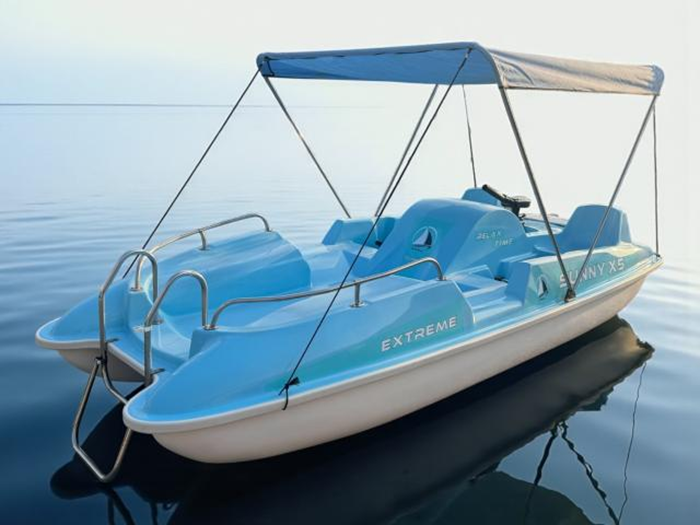
A catamaran is a vessel with two parallel hulls connected by a bridge deck. This design provides stability on the water, a spacious living area, and confident handling at anchor, making them a popular choice for family trips, charters, and leisurely sea voyages.
Modern models yachtcharteradvisor.com vary in purpose, size, and propulsion type: from light sailing boats to powerful motorboats. Understanding the main types and selection criteria helps you choose a catamaran based on your route, number of passengers, and level of comfort.
Advantages and How to Choose the Right Model
The key advantages of catamarans stem from their design. Two hulls increase stability, reduce roll, and make anchoring more comfortable. The wide deck offers a spacious saloon, comfortable sunbathing and dining areas, and excellent privacy for the cabins located between the hulls.
- Stability and comfort: Less lateral roll, easier to withstand pitching motions when at anchor.
- Space: More usable space with a length comparable to a monohull yacht.
- Shallow draft: Easier to approach shallow bays and anchor closer to shore.
- Maneuverability: Mooring is easy on both motor and twin-engine sailboats.
When choosing a catamaran, consider your goals: daytime excursions, a week-long vacation with overnight stays, or a long-distance voyage. Next, evaluate the capacity, layout, and technical condition (if purchasing) or the equipment (if renting).
- Size and capacity: focus on the number of guests and the desired privacy of the cabins.
- Route and water area: for shallow water, draft is important, for open sea, seaworthiness and cruising range.
- Type of catamaran: sailing – quieter and more economical, motor – faster and easier in terms of logistics.
- Layout: number of bathrooms, salon size, galley convenience, access to the bow net/deck.
- Equipment: awning, air conditioning, watermaker, generator, navigation, tender, safety equipment.
- Budget and Format: You can charter a yacht on the website once to test the format before purchasing or for a long-term travel program.
The final choice depends on what’s more important: speed and time management or the quiet, fuel-efficient, and romantic feel of a sail. In any scenario, a catamaran remains one of the most comfortable formats for a water vacation thanks to its combination of space and stability.
Key differences between a catamaran and a monohull: stability, draft, speed
A catamaran and a monohull solve the same problem—safe and comfortable navigation—but they achieve this in different ways: a catamaran has two hulls, while a monohull has one. This results in differences in wave performance, depth requirements, and performance dynamics.
When choosing, it’s important to consider the route and format of use: marina or anchorage, shallow bays or open sea, calm passages or a focus on speed. Below are the key parameters that often prove decisive.
Comparison by three main parameters
- Stability: A catamaran has high initial (lateral) stability – less heeling, more comfortable at anchor and mooring. A monohull heels more under sail, but rolls more smoothly in waves, and its performance is often perceived as more predictable in challenging conditions.
- Draft: A catamaran typically has a shallower draft, making it easier to approach shallow beaches, enter lagoons, and choose anchorages closer to shore. A monohull typically requires greater depth, but a keel helps with better course holding and more effective upwind sailing.
- Speed: A catamaran is often faster in flat water and moderate conditions due to the lower drag of each hull and the wide “platform.” A monohull often excels in upwind performance and can be more stable in average speed in rougher waves, where a catamaran is more dependent on proper loading and weight distribution.
Bottom Line: A catamaran is chosen for its stable “platform,” shallower draft, and potentially higher speed in calm water; a monohull is chosen for its classic seakeeping, efficient upwind performance, and familiar performance in rough seas. The optimal choice is determined not by “better/worse,” but by sailing conditions and what is more important: comfort at anchor and access to shallow water, or versatility and performance in rough seas.